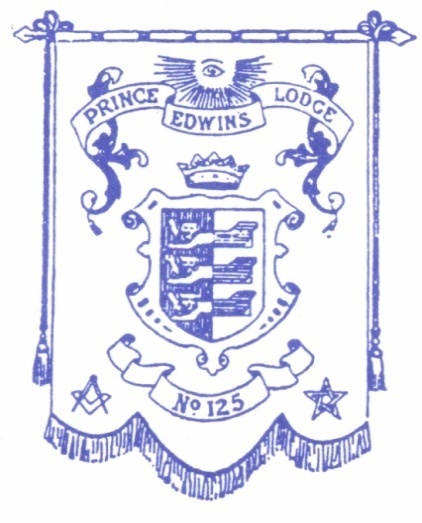
History
The Story of Prince Edwin's Lodge
From an eighteenth-century warrant to a permanent home in Hythe, the Lodge has a long and distinctive story within the Province of East Kent and the United Grand Lodge of England.
Warrant
1771
The Lodge's warrant dates from 1771, connecting Prince Edwin's with the period of the Ancient Grand Lodge.
Hythe
1807
Prince Edwin's began working in Hythe at the Red Lion on 2 March 1807.
Home
1963
The Lodge moved into the Masonic Hall on Windmill Street, the building still used today.
Origins
An Ancient Lodge with a Hythe story
Prince Edwin's Lodge traces its warrant to 1771, during the period when English Freemasonry was divided between the Antients and the Moderns. The Lodge's early history passed through Bath before the warrant was reissued and the Lodge began its enduring connection with Hythe.
The Lodge records identify 2 March 1807 as the start of Prince Edwin's working in Hythe, then at the Red Lion. From there the Lodge grew, moved, adapted, and eventually established a permanent home at Windmill Street.
1771
Date of warrant
1807
Hythe working begins
1907
Centenary Warrant
1963
Windmill Street home
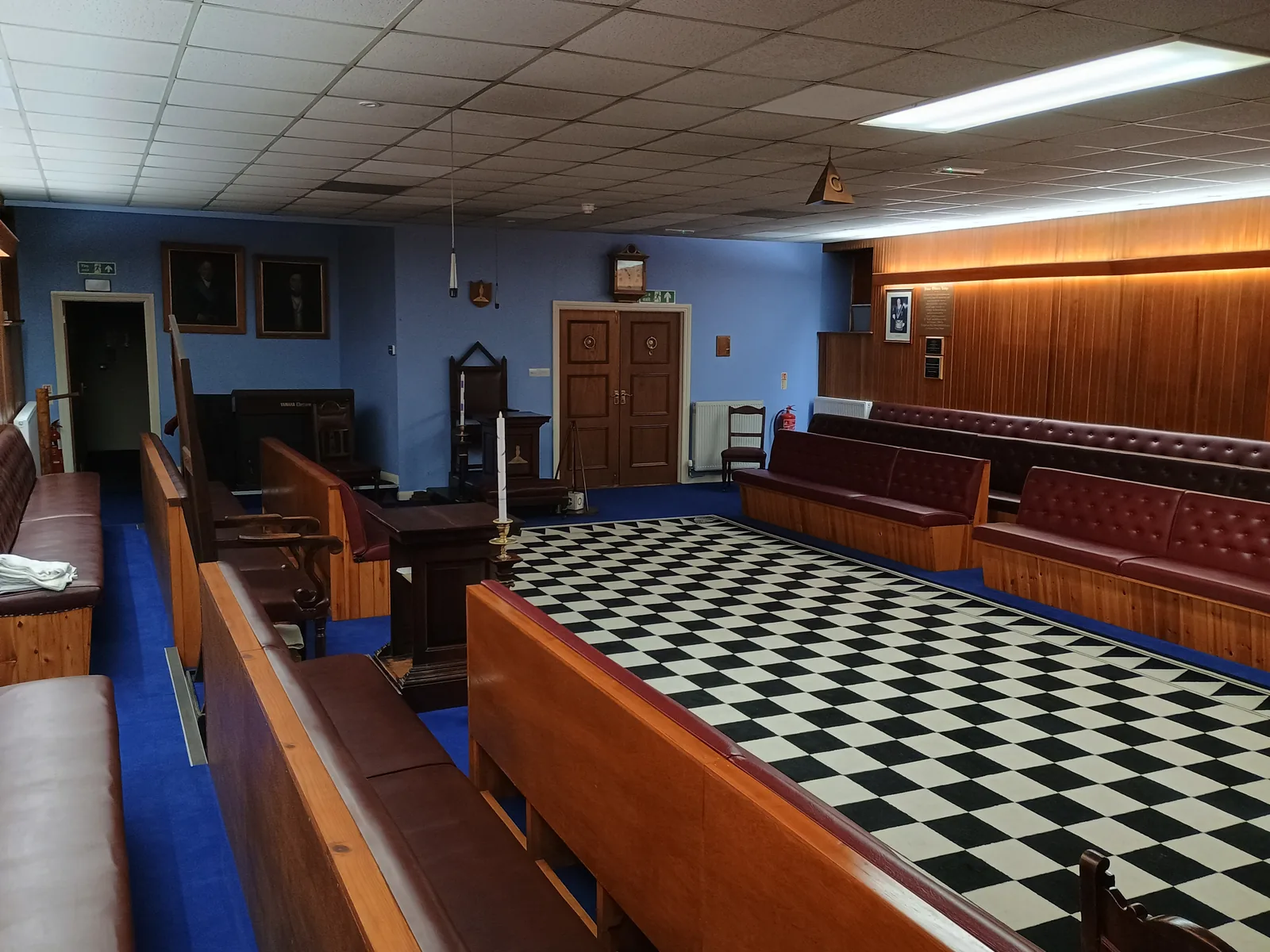
Timeline
Key moments in the Lodge record
The full archive is rich and detailed. This timeline gives visitors a clear route through the main dates that shaped Prince Edwin's Lodge.
1771
The warrant is granted
The Lodge's warrant dates from 1771 and is part of its continuing identity as one of the older Lodges connected with East Kent.
1807
Prince Edwin's begins in Hythe
On 2 March 1807 the Lodge began working in Hythe at the Red Lion, starting the town connection that continues today.
1813
The Union of the Grand Lodges
The Union brought together the rival Grand Lodges and reshaped English Freemasonry. Prince Edwin's preserved its identity through this period of change.
1822
A private hall near the church
The Lodge moved from the King's Head to a private hall near the church, with the records noting that the Lodge had increased in numbers and respectability.
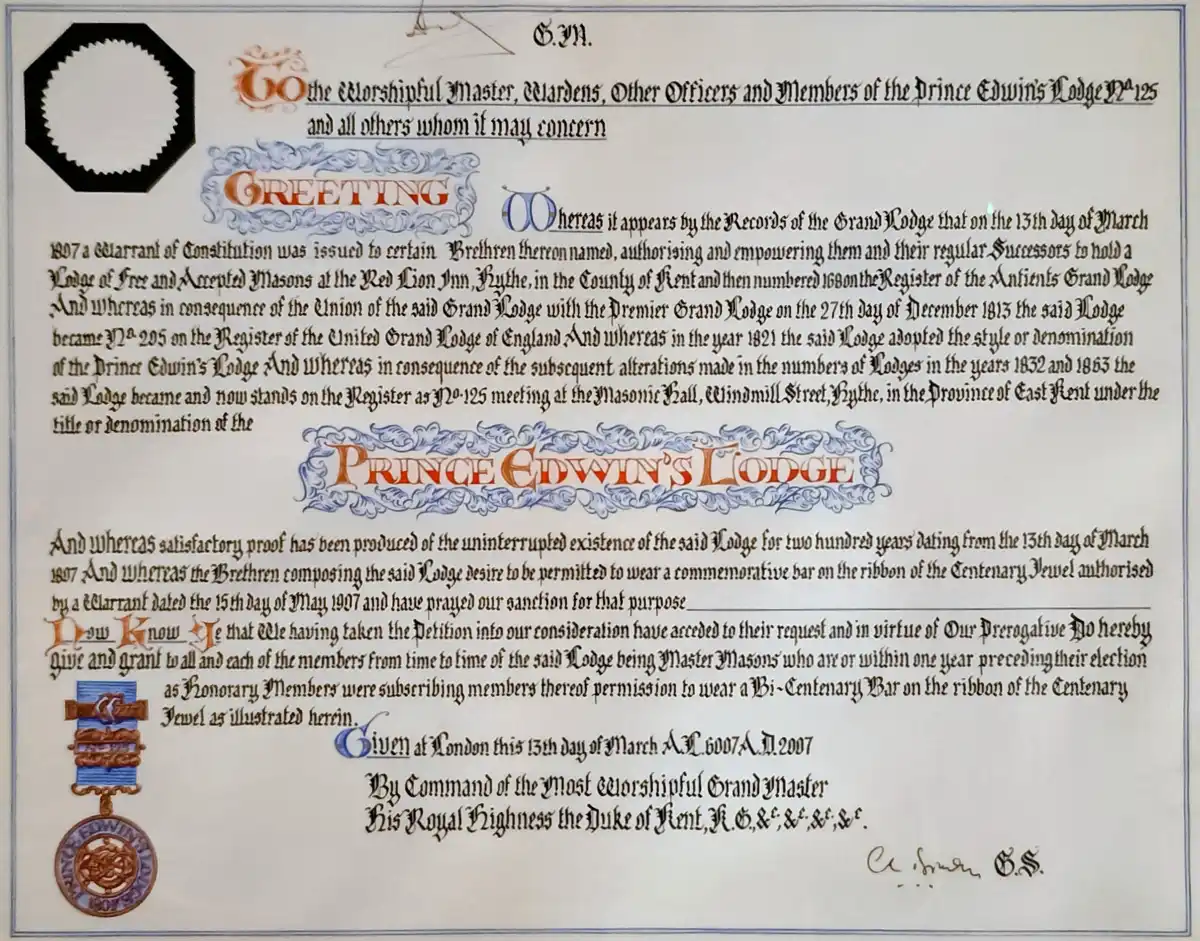
1907
Centenary Warrant
After one hundred years of uninterrupted working from 1807, the Lodge was granted its Centenary Warrant.
1963
Windmill Street Masonic Hall
The inaugural meeting at the Masonic Hall, Windmill Street, took place in February 1963, giving the Lodge a permanent home in Hythe.
1965
Dedication of the new Lodge building
The new Lodge building was dedicated on 3 February 1965 in the presence of the Provincial Grand Master.
1997
Land to the rear purchased
The land to the rear of the Lodge building was purchased, made possible by generous loans and donations from members.
Meeting Places
From inns and halls to Windmill Street
The Lodge records list several meeting places before the present Masonic Hall. This movement tells a practical story of a Lodge adapting as Hythe itself changed.
- 1807: The Red Lion
- 1811: The Duke's Head, The Canteen, and The King's Head
- 1822: Private Hall near the church
- 1909: Odd Fellows Hall
- 1912: Masonic Hall, Mount Street
- 1923: Masonic Hall, Bank Street
- 1963: Masonic Hall, Windmill Street
Atholl Connection
The Atholl Lodges Chart
Prince Edwin's Lodge is one of the Associated Atholl Lodges and owns a historic Atholl Lodges Chart. It gives the site a distinctive visual anchor and helps explain the Lodge's place in a wider Masonic story.
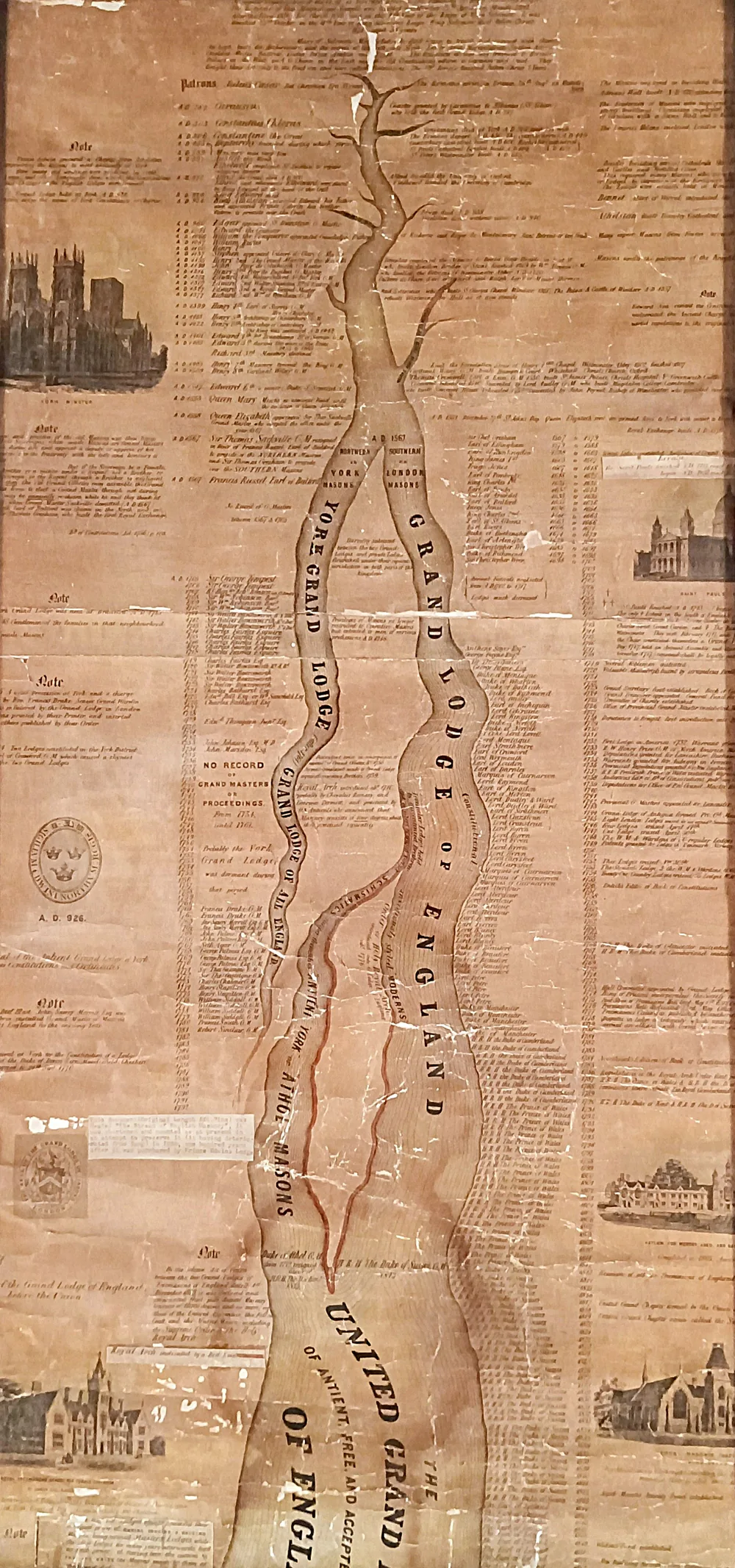
Click or tap the chart to view a larger version.
A rare piece of Lodge heritage
The chart should be treated as one of the most important visual artefacts on the website. It links the Lodge's local Hythe identity with the wider history of the Associated Atholl Lodges.
On the website, this section can become a natural place for archive notes, high-resolution details, and explanatory captions as more information is prepared.
Today
A living history, not just an archive
Prince Edwin's Lodge continues to meet at Hythe Masonic Centre, maintaining a tradition of fellowship, charity and local presence. The Lodge's history is valuable because it still belongs to an active Lodge and an active building.
Future website additions could include a digitised archive gallery, Past Masters list, historic meeting places map, and a more detailed account of the Windmill Street building.
Explore More
Discover the Lodge and the Centre
The history page should connect visitors onward to the Lodge, the Centre, and venue hire, so the archive supports both membership interest and public awareness.